

Scalable Scientific Machine Learning Lab
@ Imperial College London
We accelerate science by building robust, scalable scientific machine learning algorithms.
Latest News 🚀
-
Welcome, Dr. Gabriele Bertoli!
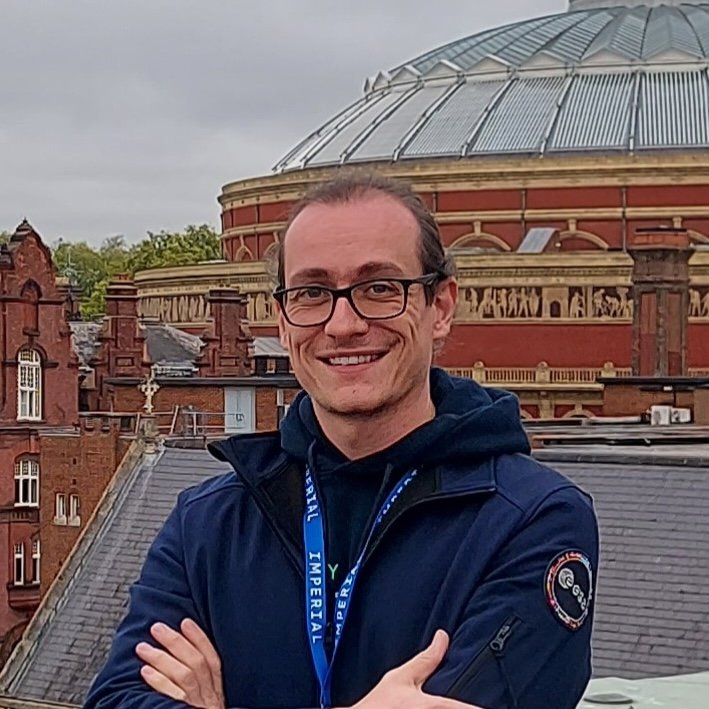
We are excited to welcome Dr. Gabriele Bertoli who has joined us as a Research Assistant co-supervised with Dr. Rossella Arcucci. Since completing his PhD,… Read more →
-
Welcome, Dr. Raúl Roberto Poppiel!
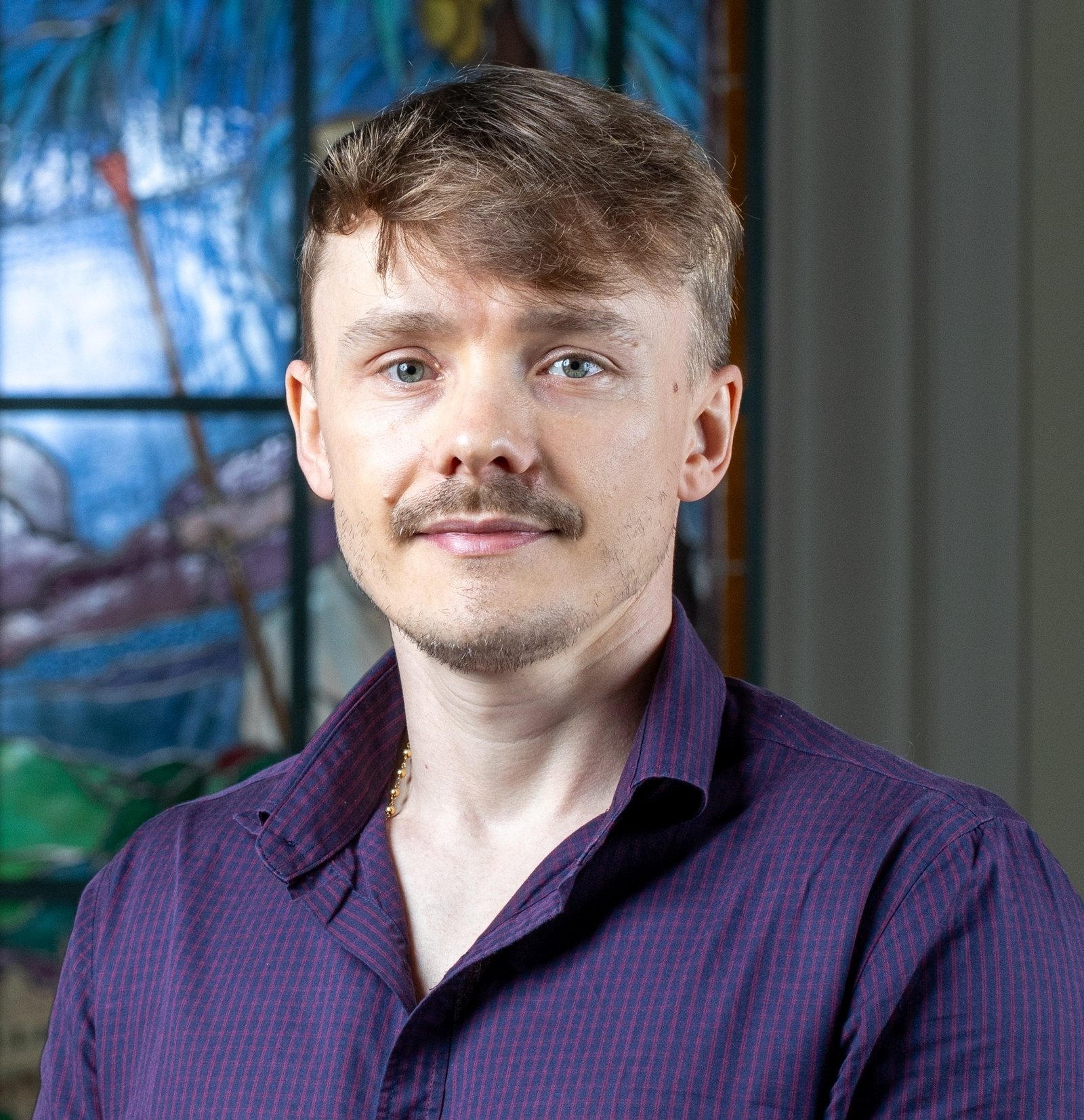
We are very excited to welcome Dr. Raúl Roberto Poppiel, An Assistant Professor at University of São Paulo who is visiting Imperial as a Schmidt… Read more →
-
Our research on discovering soil physics processes featured in Imperial News
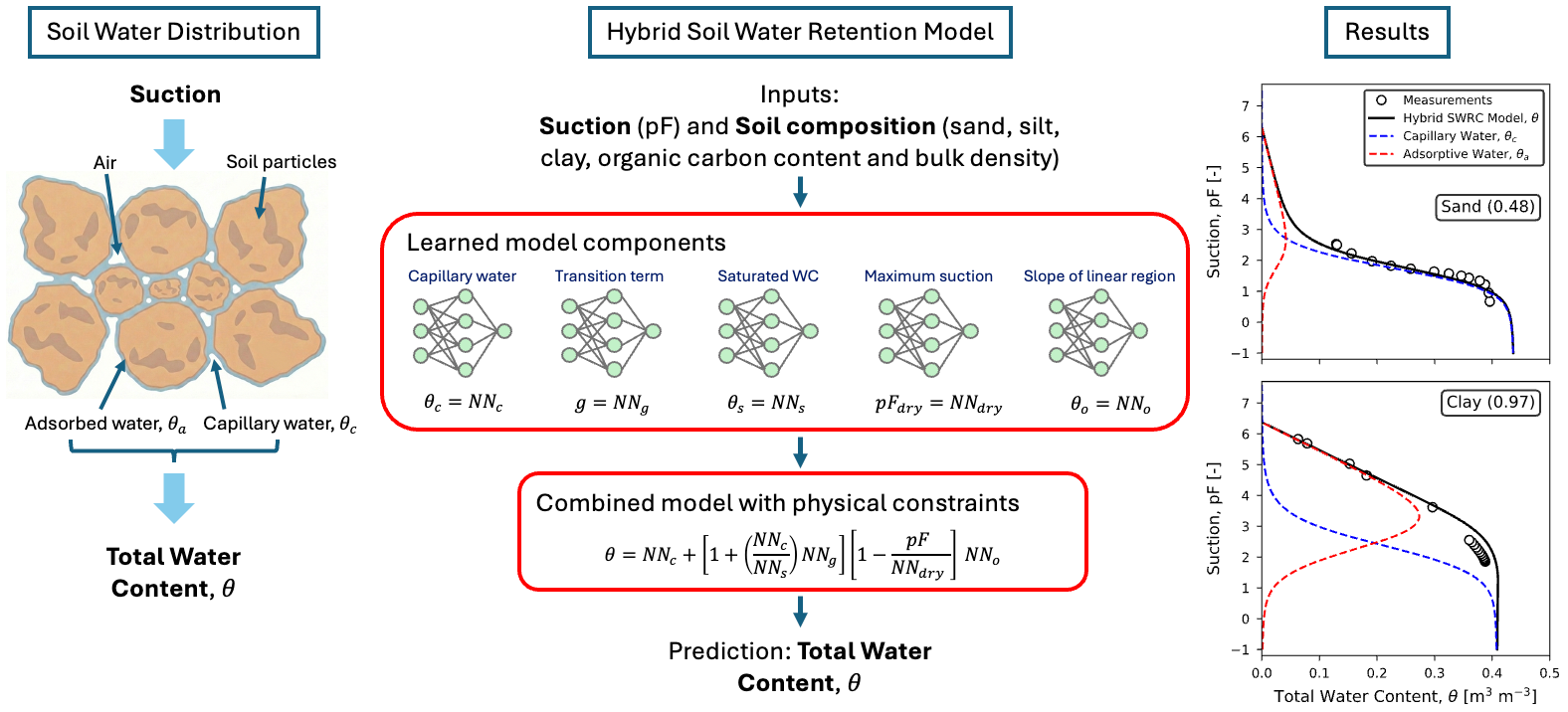
Our latest research has been featured in Imperial News. In collaboration with colleagues at Aarhus University, we developed a physics-informed AI framework that challenges a… Read more →
-
Ardan Suphi joins Lunar Frontier Development Lab

One of our PhD students, Ardan Suphi, has joined this year’s Lunar Frontier Development Lab team, where he will be helping to improve the performance… Read more →
-
Welcome, Sean De Marco!

We are very excited to welcome Sean De Marco to the lab as a PhD student! Sean’s research will focus on improving the ability of… Read more →
-
Our research on AI for planetary imaging featured in Imperial Magazine
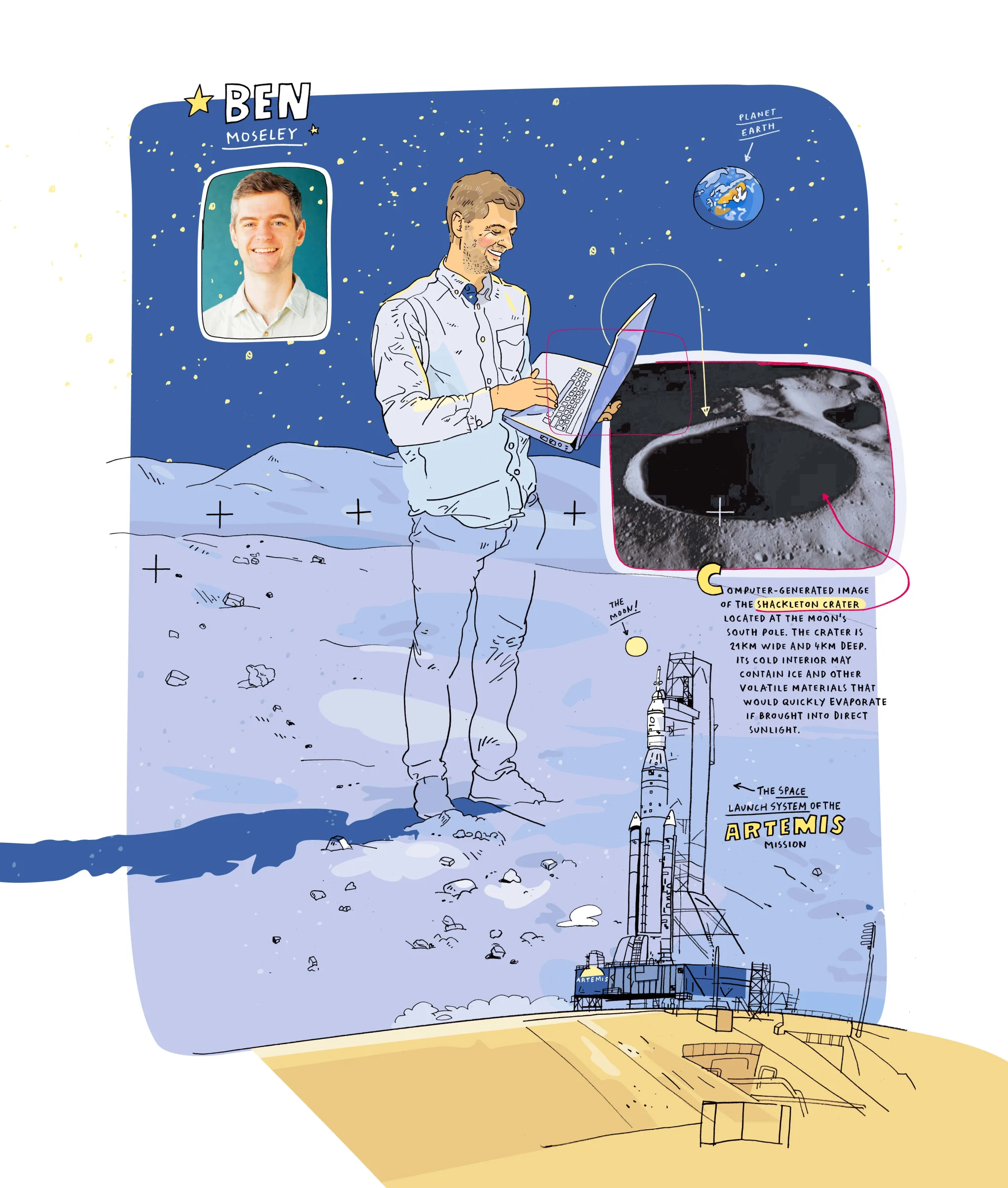
Our group’s research has been featured in Imperial Magazine (Issue 59) as part of the article “The science machines come of age,” which highlights how… Read more →
Project Highlights 🌍
-
Multi-scale simulation with physics-informed neural networks
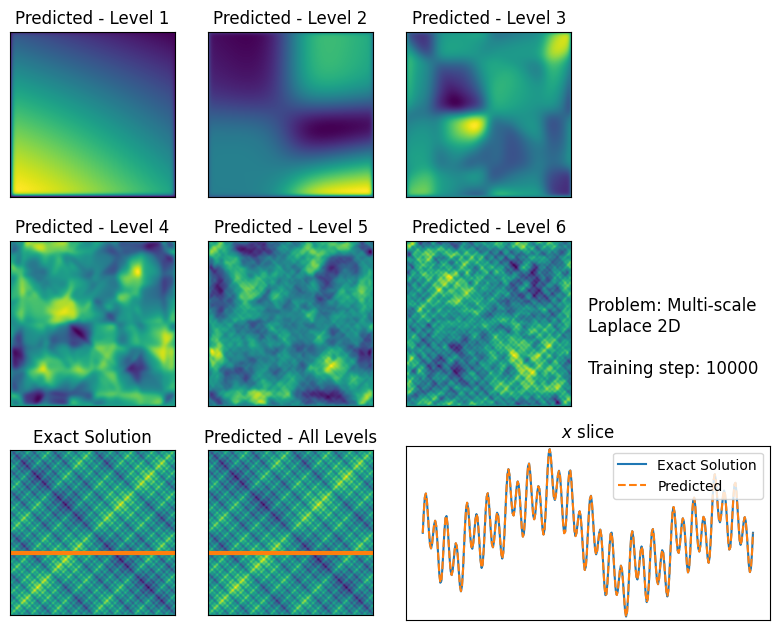
Overview Physics-informed neural networks (PINNs) have emerged as a promising tool for solving differential equations. They have been applied to many scientific problems and a… Read more →
-
SciML-enhanced planetary exploration: advancing lunar and martian imaging
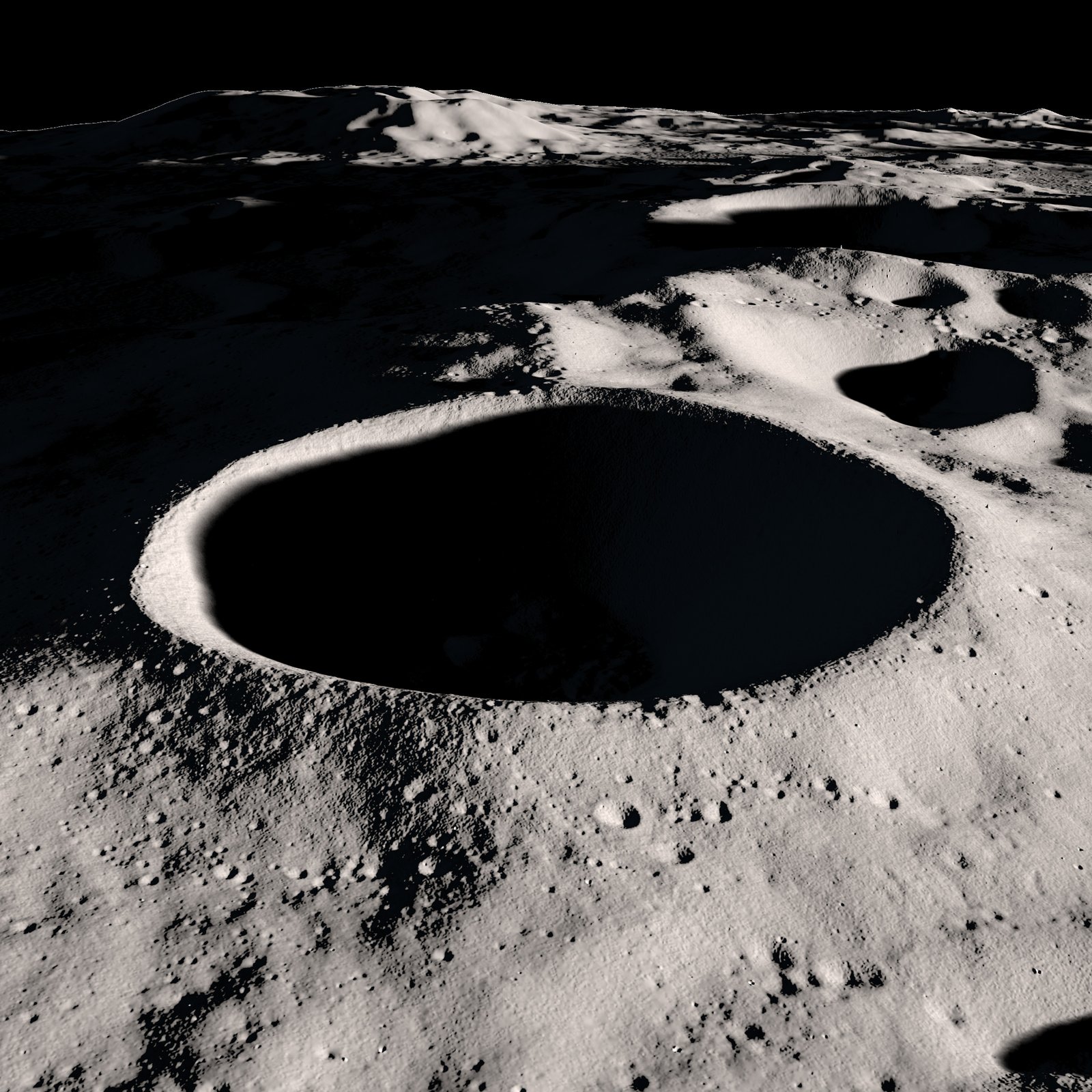
Overview Scientists and engineers leading missions like NASA’s Artemis program and future Mars expeditions, along with planetary researchers studying our solar system’s evolution, rely heavily… Read more →
-
Machine learning with geodesic flows
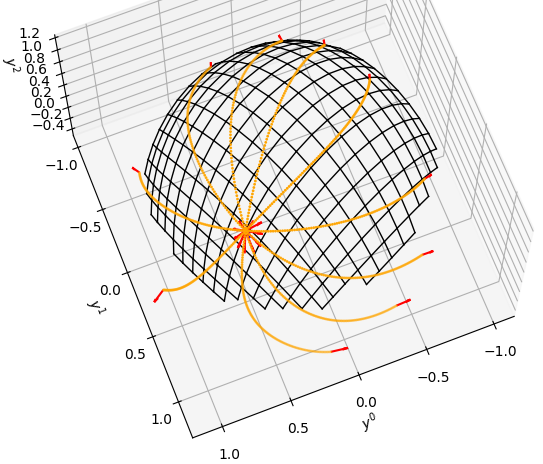
Overview Many physical, biological and engineering systems evolve over time according to geometric laws, for example planets follow elliptical orbits shaped by gravity, and fluids… Read more →
-
Efficient and differentiable population balance modelling with JAX
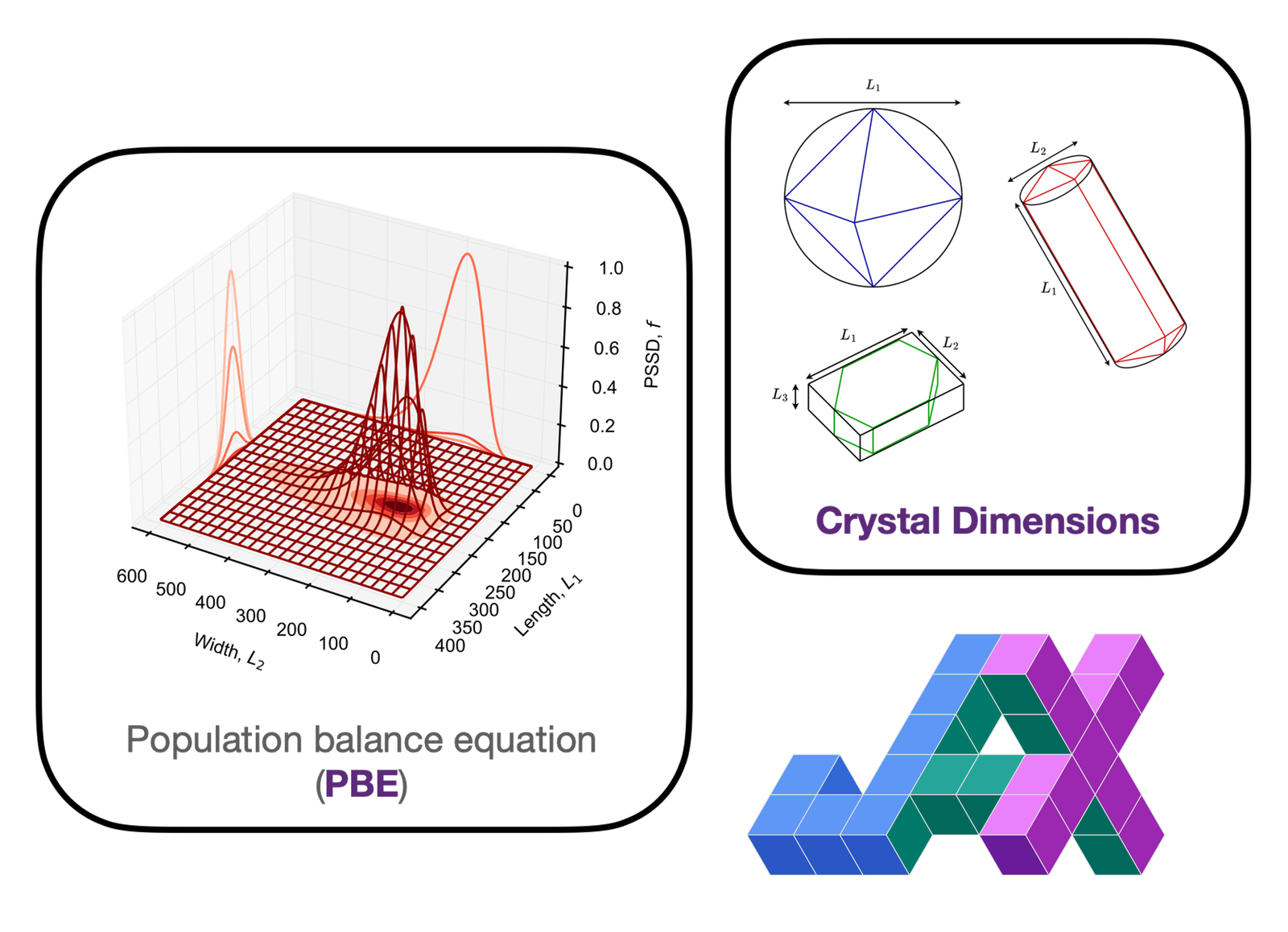
Overview Population balance equations (PBEs) are used to model the evolution of populations of particles over time, such as in crystallisation processes, chemical reactors, and… Read more →
-
Extending quantum theories with AI

Overview Quantum theory is incredibly powerful for predicting the probabilities of what we’ll see in experiments, but it cannot tell us the certain outcome of… Read more →
-
Weather and climate modelling with neural differential equations
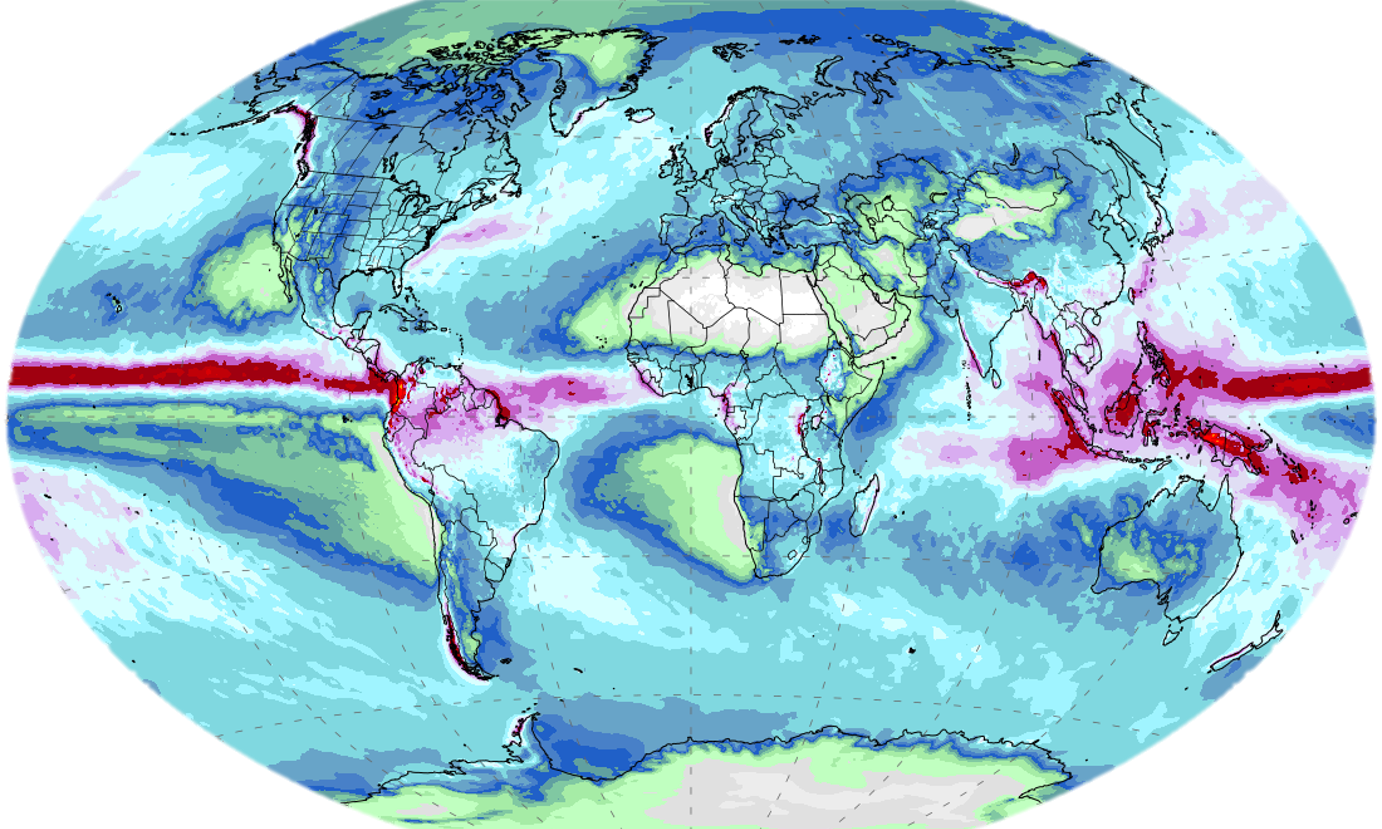
Overview This is a new direction for the lab – more to come! Team & collaborators Read more →
Latest Publications 📊
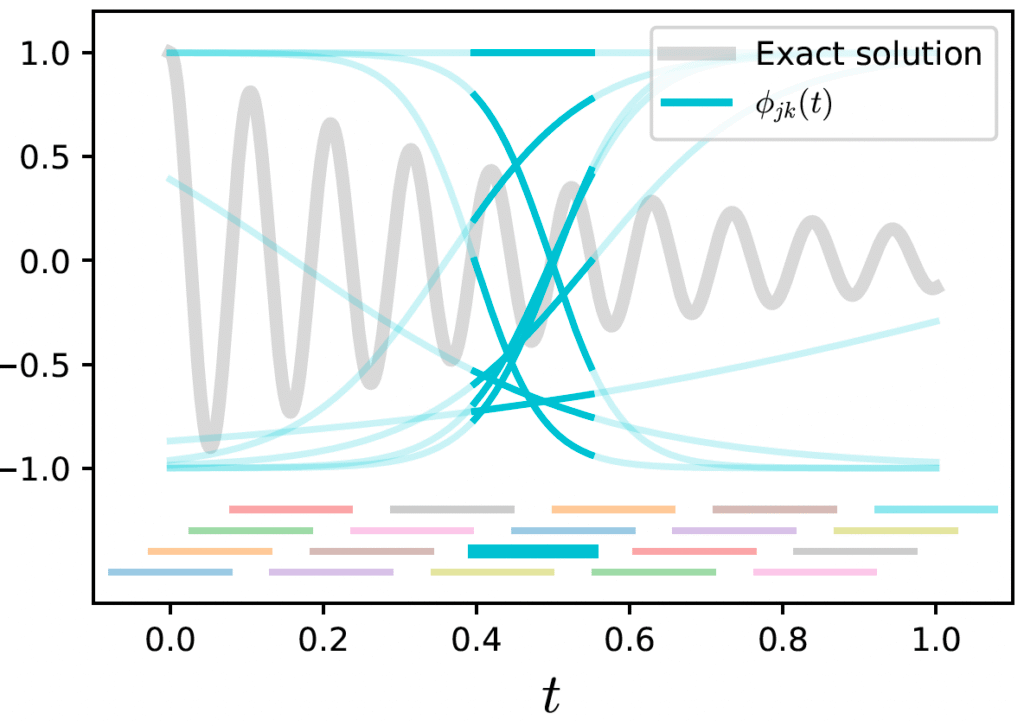
Local feature filtering for scalable and well-conditioned domain-decomposed random feature methods.
Significantly accelerated the training of physics-informed neural networks by using random features and domain decomposition to turn their optimisation problem into a structured least squares problem and proposing a novel preconditioner to accelerate convergence.
van Beek, J. W., Dolean, V., Moseley, B. (2026).
Computer Methods in Applied Mechanics and Engineering.
Paper Code Workshop

A differentiable hybrid modeling approach for learning soil water retention mechanisms from partial knowledge and data.
Reframed how soil water retention is modelled by augmenting traditional modelling with machine learning components that learnt previously uncertain physics directly from data. Using this method, we accurately reproduced soil water retention behaviour and uncovered new pore-scale insights.
Norouzi, S., Moldrup, P., Moseley, B., Robinson, D., Or, D., Hohenbrink, T. L., Minasny, B., Sadeghi, M., Arthur, E., Tuller, M., Greve, M. H., de Jonge, L. W. (2026).
Journal of Hydrology.
Paper Imperial News Article
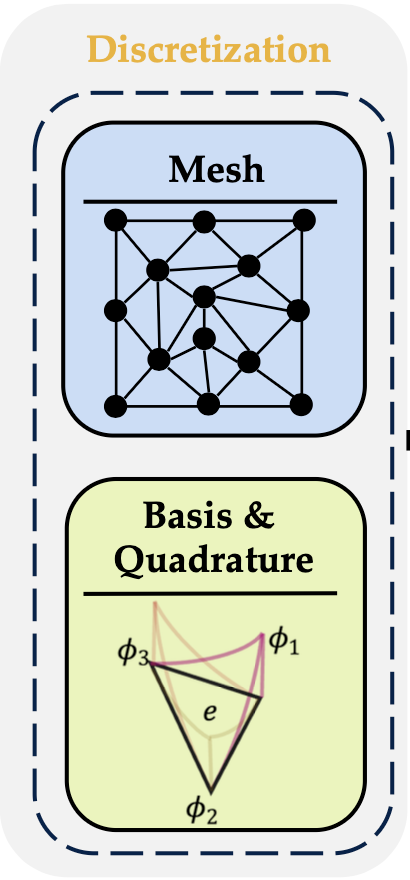
Learning, Solving and Optimizing PDEs with TensorGalerkin: an efficient high-performance Galerkin assembly algorithm.
Accelerated the solving, learning, and optimization of complex physical systems by reformulating finite element PDE computations as GPU-efficient tensor operations that eliminated costly loops, enabling faster, more scalable, and more accurate performance across simulation, inverse design, and physics-informed learning tasks.
Wen, S., Chi, M., Yu, T., Moseley, B., Michelis, M. Y., Ren, P., Sun, H., Mishra, S. (2026).
Proceedings of the 43rd International Conference on Machine Learning.
Paper
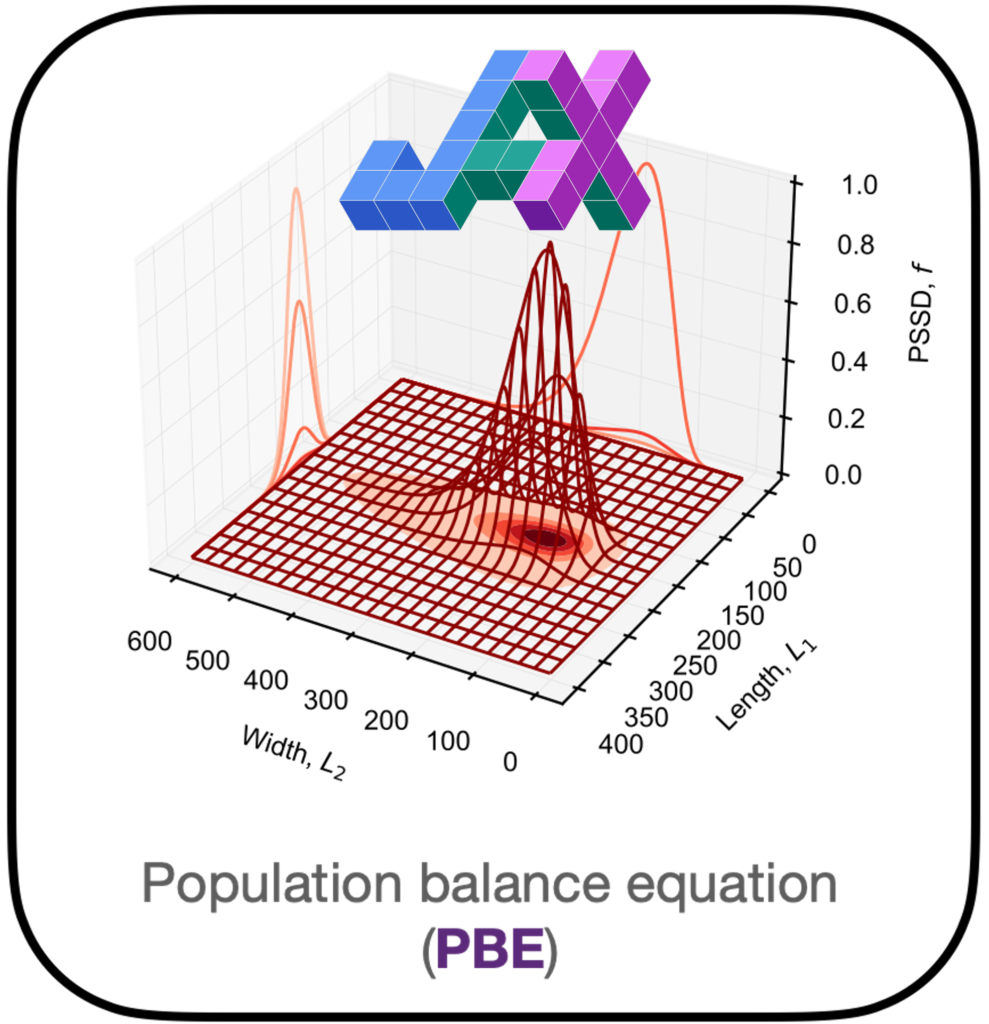
Modern, Efficient, and Differentiable Transport Equation Models Using JAX: Applications to Population Balance Equations.
Developed a modern JAX-based solver that achieves up to 300x acceleration in population balance equation simulations, enabling faster, fully differentiable models to automate engineering processes and shorten drug development timelines.
Alsubeihi, M., Jessop, A., Moseley, B., Fonte, C. P., Rajagopalan, A. K. (2025).
Industrial & Engineering Chemistry Research.
Paper
The Team 🎯
Collaborators ✨
Interested in collaborating with us?